
TRADITIONAL CHINESE MEDICINE
Dit Da Jow (跌打酒) is a type of traditional Chinese herbal medicine used primarily for external application to treat injuries, bruises, and other traumatic conditions. It is often referred to as a liniment or herbal wine. The term "Dit Da Jow" translates to "hit-fall wine" or "fall-hit wine" in English. "Dit Da" means to fall or hit, referring to traumatic injuries, and "Jow" or "Jiu" means wine or alcohol-based liquid. Dit Da Jow is believed to have originated in ancient China, where martial artists and practitioners of Chinese medicine developed formulas to accelerate the healing of injuries sustained during training or combat. It was traditionally used by martial arts masters, fighters, and athletes to enhance recovery and alleviate pain associated with bruises, sprains, strains, fractures, and other types of trauma. The Traditional Chinese liniment Dit Da Jow is commonly used by martial artists of many different styles, including Chi Wu Men, Bak Fu Pai, Wing Chun, and many others to treat impact trauma and to condition fists.
The exact composition of Dit Da Jow can vary, as there are numerous formulations and recipes passed down through generations. However, it typically consists of a combination of Chinese herbs, roots, barks, resins, and sometimes animal parts, all soaked in alcohol to extract the medicinal properties. Some common ingredients include ginseng, myrrh, frankincense, dragon's blood, safflower, cinnamon, and various other herbs known for their anti-inflammatory, analgesic, and blood circulation-promoting properties.
When applied externally, Dit Da Jow is believed to increase blood flow to the injured area, reduce swelling, alleviate pain, and accelerate the healing process. It is typically massaged onto the affected area or used to soak compresses that are then applied to the injury. It is important to note that while Dit Da Jow has been traditionally used and valued in Chinese medicine, its efficacy and safety have not been extensively studied or validated through modern scientific research. As with any herbal remedy, it is advisable to consult with a qualified healthcare professional before using Dit Da Jow, especially if you have any pre-existing medical conditions or are taking other medications.
Dit Da Jow can be found in some martial arts supply stores, traditional Chinese medicine shops, or online platforms specializing in herbal remedies. It is important to note that quality and authenticity can vary, so it is advisable to obtain Dit Da Jow from reputable sources. Additionally, individuals with allergies, sensitive skin, or certain medical conditions should exercise caution and consult a healthcare professional before using Dit Da Jow. Dit Da Jow is primarily used for the management of trauma-related injuries, such as bruises, sprains, strains, contusions, fractures, and similar conditions. It is believed to promote blood circulation, reduce inflammation, alleviate pain, and support tissue healing. Some martial artists also use Dit Da Jow as a preventive measure to strengthen the body and reduce the risk of injuries during training.
Remember that while Dit Da Jow has a long history of use, it is still considered a complementary therapy and should not replace medical treatment for serious injuries or medical conditions. It is always best to seek professional medical advice for appropriate diagnosis and treatment.


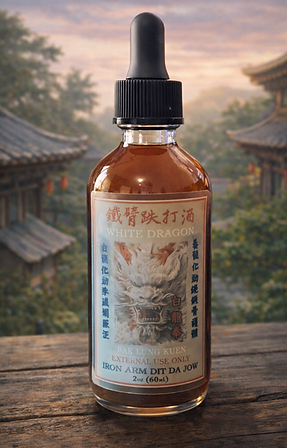
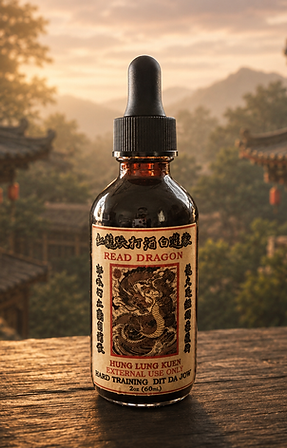


外用止痛油 (Ngoi Jung Ji Tung Yau), translated as “external pain-relief oil,” refers to a group of topical preparations widely used in traditional Chinese medicine to relieve pain, reduce discomfort, and support the recovery of muscles and joints after physical strain. These oils are designed strictly for external application and are typically massaged directly into the affected area of the body. Once applied, they produce a warming or cooling sensation that helps stimulate local circulation and ease muscular tension. For centuries, similar external remedies have been used by martial artists, laborers, and practitioners of traditional medicine who needed fast and practical relief for soreness, fatigue, and minor injuries. Unlike oral medications, these oils work locally on the area where they are applied, making them a convenient option for managing everyday aches and stiffness caused by physical activity.
Traditional external analgesic oils often contain ingredients such as menthol, camphor, and methyl salicylate, along with aromatic herbal extracts. These substances are known to create a cooling or warming effect on the skin that can temporarily reduce the sensation of pain and promote relaxation of the surrounding muscles. Modern pharmacological studies have shown that topical analgesics containing these compounds can stimulate nerve endings and increase local blood flow, which contributes to their pain-relieving effect. Because of these properties, external pain-relief oils are commonly used for muscle soreness, joint stiffness, minor sprains, and general physical fatigue after training or work. They are frequently applied before or after exercise to help prepare the muscles for activity or to assist recovery afterward.
In the broader context of traditional Chinese trauma medicine, these oils belong to a category of external therapies known as 外治法 (Ngoi Ji Faat), meaning “external treatment methods.” While they are not the same as specialized trauma liniments such as 跌打酒 (Dit Da Jow), which are formulated specifically for bruises and impact injuries, external analgesic oils still play an important supportive role in physical recovery. Their main purpose is to relieve pain, encourage circulation, and relax the body so that natural healing processes can occur more comfortably. Because of their simplicity and effectiveness, these oils remain widely used today not only in traditional medicine but also by athletes, martial artists, and individuals seeking natural methods to manage everyday muscle and joint discomfort.


止痛膏 (Ji Tung Gou), meaning “pain-relief plaster,” refers to a traditional category of topical remedies used in Chinese medicine to relieve muscle and joint discomfort. Unlike oils or liniments, these preparations are usually applied as adhesive herbal plasters or medicated patches that are placed directly on the skin over the painful area. The plaster allows the active ingredients to remain in contact with the body for an extended period, gradually delivering their effects while the person continues with normal daily activities. For generations, this method has been widely used in Chinese households, clinics, and martial arts communities to help manage minor sprains, stiffness, and soreness caused by physical effort.
Traditional 止痛膏 often contain herbal extracts along with ingredients such as menthol, camphor, and methyl salicylate, which produce a warming or cooling sensation when applied to the skin. These substances are known to temporarily relieve pain by stimulating sensory receptors and increasing local circulation in the affected area. Because the plaster stays attached to the skin, it provides continuous topical relief for several hours, making it a convenient option for individuals who experience persistent muscle fatigue, joint stiffness, or minor sports injuries. Many athletes and martial artists use these plasters after training sessions to support recovery and reduce discomfort in overworked muscles.
Within the broader framework of traditional Chinese medicine, 止痛膏 belongs to the group of external therapies used to address pain and muscular tension through topical application. While they are different from herbal trauma liniments such as 跌打酒 (Dit Da Jow) or medicated oils, their purpose is similar in that they aim to soothe the body, encourage circulation, and support the natural healing process. Because they are simple to apply and can be worn throughout the day, pain-relief plasters remain one of the most practical and accessible forms of external treatment used in traditional Chinese medicine today.


跌心膏 (Dit Sam Gou) is a traditional Chinese trauma ointment used in the practice of 跌打醫學 (Dit Da Yīhok), the branch of Chinese medicine dedicated to treating injuries caused by falls, strikes, and blunt trauma. The term can be understood through its characters: 跌 (dit) meaning fall or trauma, 心 (sam) referring to the center or core of the injury, and 膏 (gou) meaning medicinal ointment or paste. Historically, these ointments were applied directly to bruises, sprains, and soft-tissue injuries to reduce pain and swelling. In many traditional martial arts schools, especially those connected to southern Chinese systems, these remedies were part of the practical medical knowledge preserved alongside combat training.
Traditional formulas for Dit Sam Gou usually contain a mixture of herbal substances known for their ability to move blood circulation and reduce inflammation. Ingredients commonly associated with trauma medicine include 紅花 (Hung Fa, safflower), 乳香 (Yu Heung, frankincense), 沒藥 (Mut Yeuk, myrrh), and 三七 (Saam Chat, notoginseng). These herbs are believed in traditional Chinese medicine to help 活血化瘀 (wut hyut faa yu), meaning to invigorate blood and remove stagnation, which is considered essential for healing injuries. The ointment base, often made from waxes or oils, allows the medicinal ingredients to penetrate the skin and remain on the injured area for extended periods.
In the context of martial arts culture, Dit Sam Gou represents an important aspect of the traditional balance between fighting skills and healing knowledge. Many kung fu masters historically practiced both combat training and trauma medicine so they could treat injuries sustained during training or combat. While modern commercial balms often focus mainly on temporary pain relief, classical trauma ointments like Dit Sam Gou were intended to address the underlying effects of impact injuries by promoting circulation, reducing swelling, and supporting recovery. This reflects the traditional belief that a true martial practitioner should understand not only how to cause injury, but also how to restore the body afterward.

跌打丸 (Dit Da Wan) are traditional Chinese herbal pills used in the field of 跌打醫學 (Dit Da Yīhok), the branch of Chinese medicine dedicated to treating trauma caused by falls, strikes, and physical injuries. The name itself reflects its purpose: 跌 (dit) means fall or trauma, 打 (da) refers to impact or striking, and 丸 (wan) means pill. Unlike topical remedies such as liniments or ointments, Dit Da Wan are taken internally to help the body recover from injuries that affect the muscles, tendons, and circulation. They have been used historically by martial artists, bone setters, and traditional physicians to support healing after blunt trauma, bruising, or internal blood stagnation caused by impact.
Traditional formulas for Dit Da Wan are designed according to principles of Chinese herbal medicine that aim to 活血化瘀 (wut hyut faa yu), meaning to invigorate blood circulation and disperse blood stasis. Many classical formulas include herbs known for their trauma-healing properties such as 三七 (Saam Chat, Panax notoginseng), 紅花 (Hung Fa, safflower), 乳香 (Yu Heung, frankincense), and 沒藥 (Mut Yeuk, myrrh). These ingredients are believed to support circulation, reduce swelling, and relieve pain associated with injuries. In traditional practice, the herbs are carefully processed, ground into powder, and formed into small pills that are taken in measured doses.
Within the culture of traditional martial arts, Dit Da Wan represent an important part of the healing knowledge passed down alongside combat training. Many kung fu masters historically preserved trauma formulas to treat injuries sustained during conditioning, sparring, or combat. While external remedies such as 跌打酒 (Dit Da Jau) or trauma ointments are applied directly to the injured area, internal remedies like Dit Da Wan work from within by supporting the body’s natural recovery process. This reflects a long-standing principle in traditional martial culture that the true practitioner should understand both the art of combat and the knowledge required to restore health after injury.

