
HEI NG MUN
During the illustrious Qing Dynasty, in the Southern Shaolin temple, a group of martial artists known as "The Shaolin Elders" dedicated themselves to the development and refinement of the Southern Kung Fu style. Based on the five animal styles, one of them decided to implement the cat fist, after seeing a cat fighting against a snake. These skilled individuals recognized the inherent grace and power of the feline form and sought to channel its essence into their combat techniques.
One of these exceptional monks, whose Cantonese name was 鄭文豪 (Zeng Man Hou), immersed himself in the teachings and practices of the Southern Shaolin temple. As an ardent disciple, he delved deep into the study of the cat fist style, diligently training under the guidance of the other shaolin elders. With unwavering determination, 鄭文豪 (Zeng Man Hou) honed his skills, mastering the intricate footwork, lightning-fast strikes, and seamless transitions that characterized the cat fist Kung Fu.

Years later, 鄭文豪 (Zeng Man Hou) emerged as a highly esteemed and accomplished practitioner of the cat fist style. Renowned for his unparalleled agility and formidable technique, he became a respected Kung Fu master, imparting his knowledge to future generations.
Under the tutelage of 鄭文豪 (Zeng Man Hou), the cat fist Kung Fu flourished within the Hei Ng Mun lineage. One of his talented disciple and heir to 鄭文豪 (Zeng Man Hou)'s teachings, carried forward the legacy of the cat fist style. His disciple not only mastered the intricate movements of the cat fist but also imbued the art with his own unique insights, further enriching its depth and effectiveness, he only kept to himself, there is no trace that he passed down to his students.
Today, the name 鄭文豪 (Zeng Man Hou) lives on as a testament to the rich martial arts heritage of the Qing Dynasty and the Southern Shaolin temple. His contributions, along with those of his fellow Intercessors, played a pivotal role in preserving and advancing the cat fist Kung Fu style, ensuring its enduring legacy and impact on the martial arts world.
Zeng Man Hou
During his travels, Zeng Man Hou arrives in eastern Guangdong, where he encounters someone named Liu Zhi Waa (廖志華). Recognizing Liu Zhi Waa's immense potential, Zeng Man Hou decides to share his knowledge and secrets of his Kung Fu Fist.
Under Zeng Man Hou's tutelage, Liu Zhi Waa's journey, diligently learning and mastering the intricacies style. Inspired by his mentor's teachings, Liu Zhi Waa goes on to develop a unique variation of the cat fist style, Unifying all five animal styles, together with Cat Fist, into a single system that would later become known as “Five Gates Kung Fu Fist,” “Hei Ng Mun” in Cantonese, or “Chi Wu Men” in Mandarin. Cat Fist would not remain a separate system, but would instead become integrated with the other five traditions as part of this unified system.
The Fist of the Five Gates Kung Fu (氣五門) combines the swift and fluid movements of the cat fist with additional elements drawn from Liu Zhi Waa's own experiences and insights. The style incorporates five Shaolin animal elements, each representing a different aspect of combat and personal growth. This style draws its roots from the fundamental principles and techniques of the five animal styles, which include the tiger, crane, leopard, snake, and dragon. However, it distinguishes itself by emphasizing the cat fist as its primary and signature style.These gates encompass techniques focusing on agility, strength, adaptability, precision, and inner harmony.
In truth, the Chi Wu Men Kung Fu Fist, particularly its distinct variation known as the Hei Ng Mun or Chi Wu Men style, remained veiled in profound secrecy. The treasured knowledge and techniques of this style were carefully guarded and exclusively passed down within Liu Zhi Waa's family lineage. Through Liu Zhi Waa's unwavering dedication and innovative practices, the Hei Ng Mun style gained significant renown in Guandong and even beyond its borders. Martial artists from diverse backgrounds yearned to learn from him, drawn by the allure of uncovering the hidden secrets and reaping the extraordinary benefits concealed within the enigmatic Five Gates Kung Fu Fist.
The lineage account further relates that Liu Zhi Waa eventually settled in the same village associated with the martial tradition of Choi Cing Wun (蔡清玩). During his residence there, Liu became a friend of Choi Goeng (蔡羌), who appears in the tradition as an important and respected figure within the local community. It was during this period that Liu is said to have encountered and learned the local Cat Fist (貓形拳) tradition. Rather than simply preserving what he encountered unchanged, the account maintains that he incorporated principles and methods derived from Cat Fist into his existing martial knowledge and continued the development of what became Hei Ng Mun in the future.
What makes the account particularly significant is that it describes martial transmission not as an isolated event between strangers, but as something arising from shared residence, friendship, trust, and participation in the same local martial environment. Liu Zhi Waa's reported a very strong friendship with Choi Goeng therefore provides a possible context for understanding how elements of the Cat Fist tradition could have entered the development of Hei Ng Mun while knowledge associated with Liu's cat fist s system could, in turn, have been transmitted to a prominent member of the Cai village community.
The 蔡清玩 Choi Cing Wun, belongs to the unusually rich martial culture of 海陸豐 Hoi Luk Fung, Hoi Luk Fung, the historical region centered on Haifeng and Lufeng in eastern Guangdong. What survives today is not a single continuous written history. Rather, the story must be reconstructed from regional martial-arts surveys, local newspaper reporting, material collected by Hoi Luk Fung researchers and practitioners, surviving lineage traditions, photographs and documentary material, and the oral transmission preserved within later branches of the art. When these sources are placed chronologically beside one another, they reveal a local boxing culture that existed before Choi Cyu Wai, a distinctive Cat Boxing associated specifically with him, and a later transmission extending from Guangdong to Hong Kong.

Liu Zhi Waa
The deeper background begins in 蔡厝圍 Choi Cyu Wai, Cai Cuowei, a village in Haifeng remembered locally for its martial traditions. A 2014 Shanwei Daily report, 《崇武樹德揚國術:記民間武術家蔡錦溪》, “Honoring Martial Virtue and Promoting the National Art: A Record of Folk Martial Artist Cai Jinxi,” describes Cai Cuowei as a well-known martial village and identifies an older local system called 硬馬吞吐拳 Ngaang Maa Tan Tou Kuen, literally “Hard-Stance Swallow-and-Spit Boxing.” According to this account, the art originated primary with 蔡羌 Choi Goeng and was subsequently transmitted and developed through 蔡鐵 Choi Tit, 蔡清玩 Choi Cing Wun, 蔡譚榮 Choi Taam Wing, 蔡進滔 Choi Zeon Tou, 蔡學日 Choi Hok Jat, and 蔡玉城 Choi Juk Sing.
This older genealogy is important, but it must not be confused with the genealogy of Cat Boxing itself. The evidence tells us that 蔡羌 Choi Goeng was regarded as the originator of 硬馬吞吐拳 Ngaang Maa Tan Tou Kuen and that 蔡鐵 Choi Tit was an early transmitter. Cai Choi Goeng is believed to have lived approximately between c. 1800 and 1840.
The central figure is 蔡清玩 Choi Cing Wun, whose courtesy name is recorded as 養好 Joeng Hou. Regional Hoig Luk Fung martial sources identify him as a native of 海豐縣蔡厝圍鄉, Cai Cuowei village in Haifeng County. He was already employed as a martial arts instructor during the early Republican period, a birth in the late nineteenth century is plausible, probably 1890-1900.
The Hoi Luk Fung account gives us something particularly valuable about Choi Cing Wun's martial background. It says that he was proficient in 南少林蔡家拳 Naam Siu Lam Choi Gaa Kyun, Southern Shaolin Cai Family Boxing, and 峨嵋拳 Ngo Mei Kyun, Ngor Mei Boxing, and that he studied under multiple teachers. Most importantly, among the martial arts associated with him, he was one of the masters who helped spread Hei Ng Mun, also known as Mao Ying Kuen, a rare boxing system, throughout the region.
This Emei reference deserves attention. Hoi Luk Fung was a cultural contact region rather than an isolated martial enclave. Research on the region shows significant interaction among local Hoklo/Min-speaking populations, Hakka communities and neighboring Guangdong cultures. Academic research on eastern Guangdong describes the Shanwei-Hoi Luk Fung area as predominantly Hoklo while noting substantial cultural mixing and influence from neighboring Hakka communities. Historical population movements into the region also included migration from southern Fujian, western Fujian and southern Jiangxi.

Hoi-liuk-fung or Hailufeng Hakka which is originated from Lufeng county, Guangdong
This environment makes influences from Fujian and Hakka martial culture historically plausible. At present there is strong evidence demonstrating that Choi Cou Wai's Fist 硬馬吞吐拳 was a system with specifically Hakka characteristics. We can also state is considerably stronger: the regional source itself explicitly associates Choi Cing Wun with Southern Shaolin Choi Family Boxing and Emei Boxing. Therefore Ngor Mei influence belongs to the documented account of his martial background, rather than being a modern theory imposed upon the tradition.
The technical description of Mao Ying Kuen 貓形拳 preserved in the Hoi Luk Fung material is unusually detailed. The system is characterized by “快速靈巧”, speed and agility;” 敏捷多變”, rapid and unpredictable transformation; “消身借力”, removing or evading the body while borrowing the opponent's force; “因勢利導”, following and guiding according to the situation; and an emphasis on “偏門攻擊”, attacking through the side gate or oblique angle. Its tactical philosophy favors skill and positioning rather than direct contests of strength.
Its body method includes “三角步馬 Saam Gok Bou Maa”, triangular stepping and stance work; “提胯收臀”, controlling the kua and gathering the pelvis; “肘不離懷”, keeping the elbows close to the body; and strong use of wrist power. Particularly distinctive are its claw methods. The open claw is described through 撲、彈、纏、封, roughly pouncing, springing, entwining and sealing actions, while the closed claw uses 扣、掐、擒、卷, hooking, pinching, seizing and rolling actions. The source describes the arms as constantly changing, using misdirection so that an opponent may attack where the practitioner is no longer present.
During the early Republican period, Choi Cing Wun’s reputation was sufficient for him to be hired as a boxing instructor by the 海豐附城鹿境鄉蔡族武館, the Choi Clan Martial Arts School of Lujing, Fucheng, Haifeng. There he taught his 貓形拳技, Cat-Form boxing methods, together with a routine identified as 左掌右拳三步套路 Zo Zoeng Jau Kuen Saam Bou Tou Lou, approximately “Left Palm, Right Fist Three-Step Routine.” The regional source says this material was popularly associated with 蔡厝圍拳, Choi Cuo Wai Fist.
The Luk Ging school is important because it shows that Choi Cing Wun's fist was not merely a private family practice. It was being formally taught within a village martial institution. Named inheritors associated with this transmission include 蔡家喜 Choi Gaa Hei, 蔡少賀 Choi Siu Ho, 蔡少卿 Choi Siu Hing, 蔡譚鎮 Choi Taam Zan, 蔡學輝 Choi Hok Fai, 蔡家聲 Choi Gaa Sing, 蔡榮來 Choi Wing Loi, and 蔡君遠 Choi Gwan Jyun.
Choi Cing Wun's own family also continued the art. The surviving account specifically identifies 蔡學日 Choi Hok Jat as his son and 蔡漢濤 Choi Hon Tou, 蔡漢波 Choi Hon Bo, and 蔡漢真 Choi Hon Zan as his grandsons, stating that they were familiar with or proficient in the family's fist routines. Other names preserved among the inheritors include 蔡木杉 Choi Muk Caam, 蔡木旺 Choi Muk Wong, 蔡祖謙 Choi Zou Him, 蔡錦溪 Choi Gam Kai, and 蔡葵發 Choi Kwai Faat.
The appearance of 蔡錦溪 Choi Gam Kai can be independently documented. Shanwei Daily reports that Choi Gam kai was born in 1966 in Choi Cuo Wai village, began martial training at seven, and grew up surrounded by the village's martial culture. His biography again preserves the older 硬馬吞吐拳 Ngaang Maa Tan Tou Kuen genealogy beginning with Choi goeng and continuing through Choi tit and Choi Cing Wun. This provides an independent twentieth-century continuation of the Choi Cuo Wai martial environment.
Among the later figures, 蔡榮來 Choi Wing Loi is especially significant. The Hoi Luk Fung village people says that Wing Loi loved martial arts from childhood and began studying with 蔡學日, Choi Cing Wun's son, at approximately ten years old. He became accomplished in both 蔡厝圍拳 and 貓形拳, developing the methods further while maintaining the system's characteristic emphasis on speed, side-gate attack, bridging, borrowing force and deceptive hand changes.

華龍潮汕網
Hualong Chaoshan Network Information
Promote Chaoshan culture, spread national audio-visual
蔡榮來 Choi Wing Loi later accompanied 蔡學日 Choi Hok Jat in teaching outside the immediate village. The account places their teaching activity in 文明石 Man Ming Sek, also called 牛眠石, in Gongping, and 中港村 iZung Gong Cyun. Students associated with these locations include 蔡金娘 Choi Gam Noeng, 蔡文素 Choi Man Sou, 蔡蘭方 Choi Laan Fong, and 蔡醒 Choi Sing. Choi Wing Loi also taught in 陸徑 Luk Ging, where his inheritors included his younger brother 蔡榮玉 Choi Wing Juk, together with 蔡信會 Choi Seon Wui, 蔡炳鑫 Choi Bing Jam, 蔡惠進 Choi Wai Zeon, 蔡其民 Choi Kei Man, 蔡君民 Choi3 Gwan1 Man4, 呂火建 Leoi5 Fo2 Gin3, 呂小順 Leoi5 Siu2 Seon6, and 呂漢 Leoi Hon.
One of these later inheritors gives us an important chronological anchor. 蔡惠進 Choi Wai Zeon was born in 1950 and became a practitioner of traditional Southern boxing as well as a Chinese medicine practitioner. The Hoi Luk Fung account describes him as having spent decades collecting martial-arts and herbal-medicine material from Hoi Luk Fung, Hong Kong and Macau. He contributed to preserving precisely the type of regional history from which much of the surviving Choy Cing Wun information comes.
The story then moves toward Hong Kong. The regional record states explicitly that before 1949, Choi Cing Wun moved to Hong Kong and continued operating a martial arts school and accepting students there. He moved during 1935,. The source further states that Choi Cing Wun eventually died in Hong Kong in 1950’s following an infection caused by a scratch from a cat.
Within the oral transmission preserved in the Leung Wing-hang lineage, additional details connect this migration to the later history of Mao Ying Kuen. According to lineage letters and the account transmitted by Lung Fei Li, 梁永享 Leung Wing Hoeng, Leung Wing-hang, had already learned Cat Fist directly from 蔡清玩 Choi Cing Wun before Choi's relocation to Hong Kong later influenced by Leung Wing Hang. The lineage tradition further maintains that Leung Wing-hang influenced or assisted Choi Cing Wun's move to Hong Kong.
According to the Hong Kong Government’s Medical Health Department Annual Report for 1952-1953, Choi Cing Wun died in 1953. This date is compatible with the public record in the broad sense that the Hoi Luk Fung source places his migration before 1949 and his death subsequently in Hong Kong.
Another figure provides a remarkable point of contact between the Choi Cing Wun tradition and the later Hong Kong transmission: 劉烏鐳 Lau Wu Leoi, or Liu Wulei in mandarin, also known as 劉家傑 Lau Gaa Git. The Hoi Luk Fung material identifies Liu as a native of the Haifeng or Hou Luk Fung area and records that he studied under several teachers, explicitly including 蔡清玩. Lau was an eclectic and accomplished practitioner whose training incorporated material associated with Emei and several Hoi Luk Fung boxing traditions. He eventually organized his knowledge into 楊古埔劉家拳 Joeng Gu Bou Lau Gaa Kyun, Yanggu Bu Liu Family Boxing.
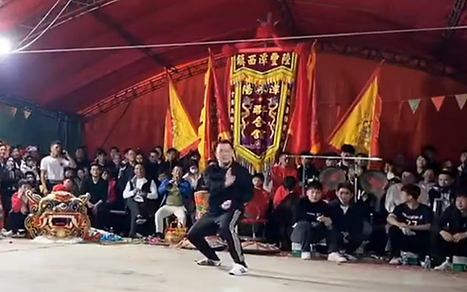

海陆丰传统武术:南拳蔡莫派
Hoi Luk Fung Traditional Martial Arts: The Choi Mo School
The history of 劉烏鐳 Lau Wu-leoi, also known as 劉家傑 Lau Gaa-git, is particularly important to the study of traditional martial arts in 海陸豐 Hoi Luk Fung, because his career connects several different streams of southern Chinese boxing. He was not simply the inheritor of one system. The surviving Hoi Luk Fung material describes him as a martial artist who began with the boxing of his home region, studied under numerous recognized teachers, absorbed methods from several traditions, taught throughout the villages of eastern Guangdong, and eventually organized his knowledge into the system remembered as 楊古埔劉家拳 Yeung Gu Bou Lau Gaa Kuen, Yeung Gu Bou Lau Family Boxing. Most importantly for the history of 貓形拳 Maau Ying Kuen, Cat-Form Boxing and Hei Ng Mun, the available Chinese source specifically names 蔡清玩 Choi Cing-wun among Lau Wu-leoi's teachers.
The principal surviving account is 《廣東省海陸豐傳統武術圖文視頻(劉烏鐳拳)》, “Guangdong Hailufeng Traditional Martial Arts in Images and Video: Lau Wu-leoi Boxing.” It was organized by 蔡惠進 Choi Wai-zeon, an important collector of Hoi Luk Fung martial history, with additional information credited to 劉多年 Lau Do-nin, 劉學爐 Lau Hok-lou, 劉雲浩 Lau Wan-hou, and 羅方毅 Lo Fong-ngai. The article was published online in 2012, but it preserves older local testimony and martial genealogical information. It is presently one of the most detailed publicly accessible Chinese accounts of Lau Wu-leoi.
According to this account, 劉烏鐳 Lau Wu-leoi, also called 劉家傑 Lau Gaa-git, originally came from 海豐縣陶河楊古埔蛟湖村 Hoi Fung Jyun Tou Ho Yeung Gu Bou Gaau Wu Cyun, Jiaohu Village in Yanggu Bu, Taohe, Haifeng County. He later lived in 汕尾市城區紅草鄉五雅上坡村, Wuyashangpo Village in the Hongcao area of Shanwei. This places his formative years firmly within the martial environment of Hailufeng in eastern Guangdong.
Unfortunately, the source does not provide Lau Wu-leoi's exact year of birth. It does, however, state that he died in Hong Kong during the 1990s at the age of seventy-eight. Depending upon the precise year of his death, this would place his birth approximately between 1912 and 1921. For historical writing, he was born circa the 1910s, possibly early 1920s, rather than assigning him a specific unsupported year.

臺灣獅
Hoi Luk Fung Traditional Martial Arts Presentation Toi Waan Si

刣獅 客家獅
Hoi Luk Fung Traditional Martial Arts Presentation Toi Si Haak Gaa Si


海陆丰传统武术初探(二)
—— 香港 蔡恵进搜集整理
Article of Hoi Luk Fung Traditional Martial Arts by Choi Wai Chun
This approximate chronology is important when considering his relationship with 蔡清玩 Choi Cing-wun. If Lau was born during the 1910s, his serious martial training would probably have begun during the 1920s or 1930s. That corresponds well with the period in which Choi Cing-wun was still active in Haifeng before relocating to Hong Kong sometime before 1949.
Lau Wu-leoi loved martial arts from childhood and initially practiced the traditional boxing of his own home region. This is an important detail because it means his martial education did not begin with Choi Cing-wun. He was already exposed to the martial culture of 楊古埔 Yeung Gu Bou before seeking instruction from other masters.
Lau Wu-leoi's martial education appears to have been unusually broad. After practicing his hometown style, he studied under masters including 蔡清玩 Choi Cing-wun, 江貴 Gong Gwai, and 劉添 Lau Tim. It then explains that Lau learned from numerous teachers and eventually synthesized the essence of more than ten different styles traditions.
Among the influences specifically named are 峨嵋 Ngo Mei, Emei Fist, 鳳陽 Fung Yeung, Fengyang Fist, methods associated with 江貴 Gong Gwai, 劉添 Lau Tim, 葉添 Yip Tim, 劉成芳 Lau Sing-fong, 劉仕忠 Lau Si-jung, and 蔡清玩 Choi Cing-wun. This is one reason it would be inaccurate to describe Lau Wu-leoi simply as a “Cai Family boxer.” Choi Cing-wun was clearly one of his teachers, but Lau's eventual system represented a much wider Hoi Luk Fung martial education.
One of those teachers is particularly well documented. 劉仕忠 Lau Si-jung, born in 1897 and known by the nickname 三腳虎 Saam Goek Fu, Three-Legged Tiger, was an important Hoi Luk Fungmartial artist associated with 蔡莫派拳 Choi Mok Paai Kuen, Choi-Mok School Boxing. A separate Hailufeng history explicitly lists 劉烏鐳 Lau Wu-leoi among Lau Si-jung's inheritors. Lau Si-jung's art itself combined 蔡家拳 Choi Gaa Kuen, Choi Family Boxing and 莫家拳 Mok Gaa Kuen, Mok Family Boxing, which provides another Cai-family component within Lau Wu-leoi's broader martial education.
Lau Wu-leoi encountered Choi-family methods through more than one avenue. Choi Cing-wun represented the Choi Cuo Wei tradition and the rare 貓形拳 Maau Ying Kuen, while Lau Si-jung represented the 蔡莫派 Choi Mok Paai tradition. These should not be confused as the same system, but both contributed to the extraordinarily diverse martial environment in which Lau Wu-leoi developed.
The most significant sentence in the public Chinese record is the statement that Lau Wu-leoi:
“後拜蔡清玩、江貴、劉添等為師”
In English, this means that he later took Choi Cing-wun, Gong Gwai, Lau Tim and others as teachers. This is significant because it gives us independent Chinese evidence connecting 劉烏鐳 Lau Wu-leoi directly to 蔡清玩 Choi Cing-wun. The connection does not depend solely upon the later oral history of another lineage. Separately, Hoi Luk Fung material identifies Choi Cing-wun as the master associated with the development and transmission of 貓形拳 Maau Ying Kuen. When combined with the lineage tradition identifying Lau Wu-leoi as a later Cat Fist practitioner, the historical relationship becomes highly relevant, but the public source and lineage tradition should remain distinguishable.
Lau Wu-leoi eventually took the material he had accumulated from numerous teachers and reorganized it. The source uses the expression 棄偽存精,融匯貫通, meaning roughly that he discarded what he considered ineffective or inessential, retained the refined material, and integrated what he had learned into a coherent whole. From this process emerged the boxing system known as 楊古埔劉家拳 Yeung Gu Bou Lau Gaa Kuen, literally “Yanggu Bu Lau Family Boxing.” It was also locally called the 蛟湖種 Gaau Wu Zung, or “Jiaohu branch/type,” referring to his native village.


正宗的广东中山刘家拳
Authentic Lau Family Fist from Zhongshan, Guangdong
This point is important historically. 劉家拳 Lau Gaa Kuen in this context should not automatically be identified with every other southern Chinese system carrying the name “Lau Family Boxing.” The source specifically presents this as a system organized by Lau Wu-leoi from the martial material he had acquired in Hoi Luk Fung.
The system is described as powerful but highly adaptable. Its techniques were said to be 剛勁, strong and forceful; capable of both attack and defense; flexible and changeable; compact in structure; and delivered through rapid continuous combinations. The traditional description emphasizes the principle that a fist should not be issued meaninglessly and a hand should not return empty. Characteristic hand methods include 砸, smashing; 劈, chopping; 扣, hooking or fastening; 摟, gathering or pulling; and 纏, entwining.
The Lau tradition is particularly interesting technically because among its fundamental material are 三步推 Saam Bou Teoi, Three-Step Push; 三角仔 Saam Gok Zai, Small Triangle; 四門三角 Sei Mun Saam Gok, Four-Gate Triangle; and 三角馬 Saam Gok Maa, Triangle Stance. The appearance of triangular footwork is noteworthy beside Choi Cing Wun documented 三角步馬, although similarity alone cannot prove which of Liu's several teachers supplied a particular method.
The repeated use of 三角 saam gok, triangle, is particularly interesting in comparison with the documented 三角步馬 Saam Gok Bou Maa, triangular stepping and stance method, associated with Choi Cing-wun's Cat Boxing. This resemblance deserves further research, particularly given the independently documented teacher-student relationship between Choi Cing-wun and Lau Wu-leoi.
Lau's curriculum became extensive. The surviving record lists dozens of methods and routines, including 虎手 Fu Sau, Tiger Hand, 猴子拳 Hau Zi Kuen, Monkey Boxing, 打四門 Daa Sei Mun, Striking the Four Gates, 老猴索樹 Lou Hau Sok Syu, Old Monkey Grasping the Tree, 雙龍搶珠 Soeng Lung Coeng Zyu, Twin Dragons Seizing the Pearl, 白鶴展翅 Baak Hok Zin Ci, 氣五門 Hei Ng Mun White Crane Spreads Its Wings, and numerous additional routines. This enormous curriculum reflects Lau's reputation as a collector and synthesizer of Hoi Luk Fung martial knowledge rather than the representative of only one animal style.
Lau Wu-leoi began teaching while still a young man. At the beginning of his teaching career, he reportedly traveled with the older clan martial artist 劉勝進 Lau Sing-zeon to teach boxing outside their home village. Later, Lau traveled independently from village to village and became a professional martial arts instructor.


海豐附城鹿境蔡族武館
CHoi Clan Martial Arts School at Lujing, Fucheng, Haifeng
His teaching activity appears to have been extensive. The surviving account says he was employed by more than thirty martial arts and lion-dance schools across Hoi Luk Fung. These included institutions in Yeung Gu Bou Gaau Wu, San Cu, Haa Jan Gaa, Sin Cu Haang, Hung Cou, Luk Fung, Mui Lung, and other communities around Hoi Fung and Shan Mei. Among the named schools were 保順館 Bou Seon Gun, Po Shun School, 新興館 San Hing Gun, New Prosperity School, 義興館 Ji Hing Gun, Righteous Prosperity School, and 聯興館 Lyun Hing Gun, United Prosperity School.
Approximately one thousand people in Hoi Luk Fung practiced his boxing. The same source preserves traditional stories about his fighting ability, including claims that he could knock over a bull with a punch and that on one occasion at Cing Haang market he defeated more than thirty people while intervening in an injustice.
The Chinese source states: 1962年劉烏鐳定居香港,繼續收徒傳授武術
In English: “In 1962, Lau Wu-leoi settled permanently in Hong Kong, where he continued accepting students and transmitting martial arts.” Therefore the chronology is quite clear. Lau spent the major formative and teaching portion of his early life in 海豐 Hoi Fung and the wider Hailufeng region, developed a substantial reputation there, and then relocated permanently to 香港 Hoeng Gong, Hong Kong, in 1962


海陆丰传统武术:南拳蔡莫派
Hoi Luk Fung Traditional Martial Arts: Article
According to the lineage masters, Leung Wing-hang and Lau Wu Leoi were kung fu brothers or martial relatives through this broader transmission, and in 1965, Leung Wing-hang took Lung Fei Li to train with Lau Wu Leoi, whom he described as his kung fu uncle, specifically in connection with learning and refining the Cat Fist with a different perspective. In this overall history, Leung Wing-hang and Lau Wu Leoi later worked to organize and preserve the material so that the art could be transmitted forward. This 1965 encounter is especially significant because it places the later lineage in personal contact with a practitioner whom independent Hoi Luk Fung material also identifies as having studied under Choi Cing Wun.
The chronology of Lau Wu Leoi independently fits this general period. The available Hoi Luk Fung biographical material places him permanently in Hong Kong by 1962 and reports that he died there in the 1990s at approximately 78 years old. His birth therefore likely falls somewhere around the 1910s or early 1920s, depending on his exact death year. Thus, Lau would indeed have been an established middle-aged martial artist in Hong Kong in 1965.
The Chinese record specifically identifies two sons of Lau Wu-leoi among the inheritors of 楊古埔劉家拳 Yeung Gu Bou Lau Gaa Kuen:
劉興訟 Lau Hing-zung, son
and
劉學耀 Lau Hok-jiu, son.
It also names three grandsons:
劉雲信 Lau Wan-seon, grandson
劉雲浩 Lau Wan-hou, grandson
and
劉雲泳 Lau Wan-wing, grandson.
This is significant because 劉雲浩 Lau Wan-hou was also one of the people credited with supplying information used by Choi Wai-zeon in assembling the historical account. In other words, at least one grandson was not merely a name preserved on a family tree. He participated in preserving information about his grandfather's martial history.
The same source also lists 劉學爐 Lau Hok-lou, who likewise provided information for the historical record, together with a much larger body of inheritors including 劉城極 Lau Sing-gik, 劉德孫 Lau Dak-syun, 劉仁圍 Lau Jan-wai, 劉火星 Lau Fo-sing, 劉木珍 Lau Muk-zan, 劉汝專 Lau Jyu-zyun, 劉木珠 Lau Muk-zyu, 劉木清 Lau Muk-cing, 劉華珍 Lau Waa-zan, 劉金讀 Lau Gam-duk, 劉金渺 Lau Gam-miu, 劉端瑞 Lau Dyun-seoi, 劉瑞棠 Lau Seoi-tong, 劉海榮 Lau Hoi-wing, 劉克寶 Lau Hak-bou, and 劉梓桓 Lau Zi-wun.
There were also inheritors outside the Lau family. The source names 曾明宜 Zang Ming-ji, 陳烈輝 Can Lit-fai, 曾紀岩 Zang Gei-ngaam, 曾紀展 Zang Gei-zin, 黃庭明 Wong Ting-ming, and 黃庭輝 Wong Ting-fai. Particularly interesting is Wong Ting-fai, who is explicitly identified as Lau Wu-leoi's adopted son, 義子 ji zi.
One later inheritor, 劉梓桓 Lau Zi-wun, is associated in the source with the establishment in Hong Kong of 樁藝館瑞麟龍獅團, a martial and dragon-lion organization. This indicates that at least part of the Lau Wu-leoi tradition continued institutionally in Hong Kong rather than disappearing immediately after his death.
There is also evidence of continued practice in Guangdong. The original article identifies 劉海榮 Lau Hoi-wing performing Lau Wu-leoi Boxing and refers to a Shanwei television program about Lau Wu-leoi's boxing, as well as practitioners from the Jiancha village lion school demonstrating 楊古埔劉家拳.
The article says simply that Lau Wu-leoi: 90年代間在港仙逝、享年78歲
Meaning that he died in Hong Kong sometime during the 1990s at the age of seventy-eight. Lau Wu-leoi occupies an unusual position in the history of 貓形拳 Maau Ying Kuen because two separate bodies of evidence converge around him.
The Hoi Luk Fung historical material independently identifies 蔡清玩 Choi Cing-wun as one of Lau Wu-leoi's teachers. It also establishes Lau as a major Hoi Luk Fung martial artist who eventually developed 楊古埔劉家拳 Yeung Gu Bou Lau Gaa Kuen, taught extensively throughout eastern Guangdong, and relocated permanently to Hong Kong in 1962
Within the lineage account, the Choi Cing Wun transmission also predates another important stage in Leung Wing-hang's martial development. According to the tradition, Leung's study of Cat Fist under Choi Cing Wun occurred after his later encounters with 楊漢傑 Yeung Hon-git and 陳三甲 Chan Saam-gap. Both men had previously studied under Choi Cing Wun and had also trained at the Choi Clan Martial Arts School, 海豐附城鹿境蔡族武館, in Hoi Luk Fung. Those later teachers belong to another layer of the martial genealogy that eventually contributed to 氣五門 Hei Ng Mun. Consequently, the relationship between Mao Ying Kuen and Hei Ng Mun should not be described simply as though the two names were interchangeable and became one style. Mao Ying Kuen was taught as closed-door material, while Hei Ng Mun served as the foundational system taught to students. Rather, the Choi Cing Wun Cat Fist transmission represents one identifiable strand that entered the broader body of knowledge later organized and transmitted through Leung Wing-hang.

蔡锦溪
Choi Gam Kai. Choi Cing Wun grandson
The name Hei Ng Mun was officially adopted to unify Cat Fist and Five Gates Fist into a single system after Leung Wing-hang and Lau Wu-leoi reunited in Hong Kong and worked together to organize and structure the system. However, the martial tradition itself is understood to predate this formal naming. According to several texts and accounts attributed to Choi Cing Wun, he stated that his Sifu, Choi Tit, and Goeng had previously received this martial knowledge from Liu Zhi Waa. Therefore, Hei Ng Mun represents the later formal organization and naming of an older body of martial knowledge, rather than the creation of an entirely new system in Hong Kong.
This distinction is historically important. Public Hoi Luk Fung evidence establishes a 貓形拳 associated with Choi Cing Wun. It establishes his origin in Choi Cing Wun, his knowledge of Southern Shaolin Choi Family Fist and Emei Fist, his teaching at the Luk Ging Choi Clan Martial Arts School, his named family and non-family inheritors, his relocation to Hong Kong before 1949, and his continuation of teaching there. Independent Hoi Luk Fung evidence also places Lau Wu Leoi among Choi Cing Wun's students.
The genealogy is not a simple straight line. The older Choi Cing Wun martial tradition is remembered through 蔡羌 Choi Goeng → 蔡鐵 Choi Tit → 蔡清玩 Choi Cing Wun, followed within the 硬馬吞吐拳 history by 蔡譚榮 Choi Taam Wing → 蔡進滔 Choi Zeon Tou → 蔡學日 Choi Hok Jat → 蔡玉城 Choi Yuk Sing. This is a martial transmission sequence, not necessarily a father-to-son genealogy.
The Cat Fist family transmission, meanwhile, centers upon 蔡清玩, his son 蔡學日, and his grandsons 蔡漢濤, 蔡漢波 and 蔡漢真. The broader Choi Cing Wun transmission includes 蔡木杉, 蔡木旺, 蔡祖謙, 蔡錦溪 and 蔡葵發, while his Luk Ging school produced or preserved a branch represented by 蔡家喜, 蔡少賀, 蔡少卿, 蔡譚鎮, 蔡學輝, 蔡家聲, 蔡榮來 and 蔡君遠. Choi Wing Loi subsequently transmitted the fist to another generation, including 蔡榮玉, 蔡信會, 蔡炳鑫, 蔡惠進, 蔡其民, 蔡君民, 呂火建, 呂小順 and 呂漢.
Alongside those branches stands 劉烏鐳 Lau Wu-leoi, independently documented as a student of Choi Cing Wun among several masters, and, according to the later lineage tradition, 梁永享 Leung Wing-hang, whose Cat Fist transmission ultimately became part of the body of knowledge preserved within the later Hei Ng Mun lineage.
What emerges from these records is therefore considerably more substantial than a modern claim that a “Cat Style” once existed. We have a named early twentieth-century master, 蔡清玩; a specific village, 蔡厝圍; an older documented local boxing tradition, 硬馬吞吐拳; an institutional teaching location, 鹿境蔡族武館; a named art, 貓形拳; a technical description of its tactics, stance and claw methods; named sons, grandsons, students and later inheritors; documented movement of the master to Hong Kong; and an independently recorded student, 劉烏鐳, who also established himself in Hong Kong.

國術協會介紹傳統拳術瑰寶
The Kuoshu Association introduces treasures of traditional boxing arts.
Article about Hei Ng Mun 1955
For that reason, the history of Cat Fist within Hei Ng Mun is best understood not as an isolated animal imitation system but as a branch of the larger martial culture of Choi Cing Wun and Hoi Luk Fung, shaped by Choi Cing Wun’s background in Southern Shaolin Choi Family Boxing and Emei Boxing, developed around the tactical qualities associated with the cat, transmitted through family and village institutions, and eventually carried from Haifeng into Hong Kong. From there, according to the preserved lineage tradition, its path intersected with Leung Wing-hang and Lau Wu Leoi, providing one of the historical foundations from which the later Cat Fist transmission associated with Hei Ng Mun was preserved.
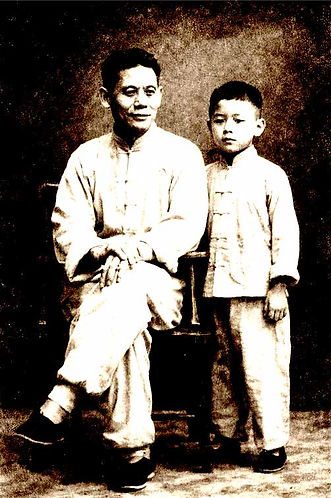
Leung Wing Hang and Lung Fei Li 1965

LUNG FEI LI AT HIS YOUNG AGE

LUNG FEI LI
Articles and Official Documents:
貓形拳與蔡家拳之歷史
Maau Jing Kyun jyu Choi Gaa Kyun z Lik6 Si
The History of Cat-Form Boxing and the Cai Family Boxing Tradition
The most important public sources behind this reconstruction are the Hailufeng study 《廣東省海陸豐傳統武術圖文視頻(蔡清玩拳)》, “Guangdong Hailufeng Traditional Martial Arts in Images and Video: Cai Qingwan Boxing” Original Hailufeng Cai Qingwan material, 《海陸豐傳統武術初探(二)》, “A Preliminary Study of Traditional Hailufeng Martial Arts, Part II” Hailufeng martial arts survey, and the Shanwei Daily profile 《崇武樹德揚國術:記民間武術家蔡錦溪》, “Honoring Martial Virtue and Promoting the National Art: A Record of Folk Martial Artist Cai Jinxi” Shanwei Daily material on Cai Cuowei and Cai Jinxi. These sources should be read together with the surviving lineage letters and oral transmission, while keeping clear which statements are independently documented and which are preserved within the lineage itself.